Best Dehumidifiers for European Homes 2026: Complete Buying Guide
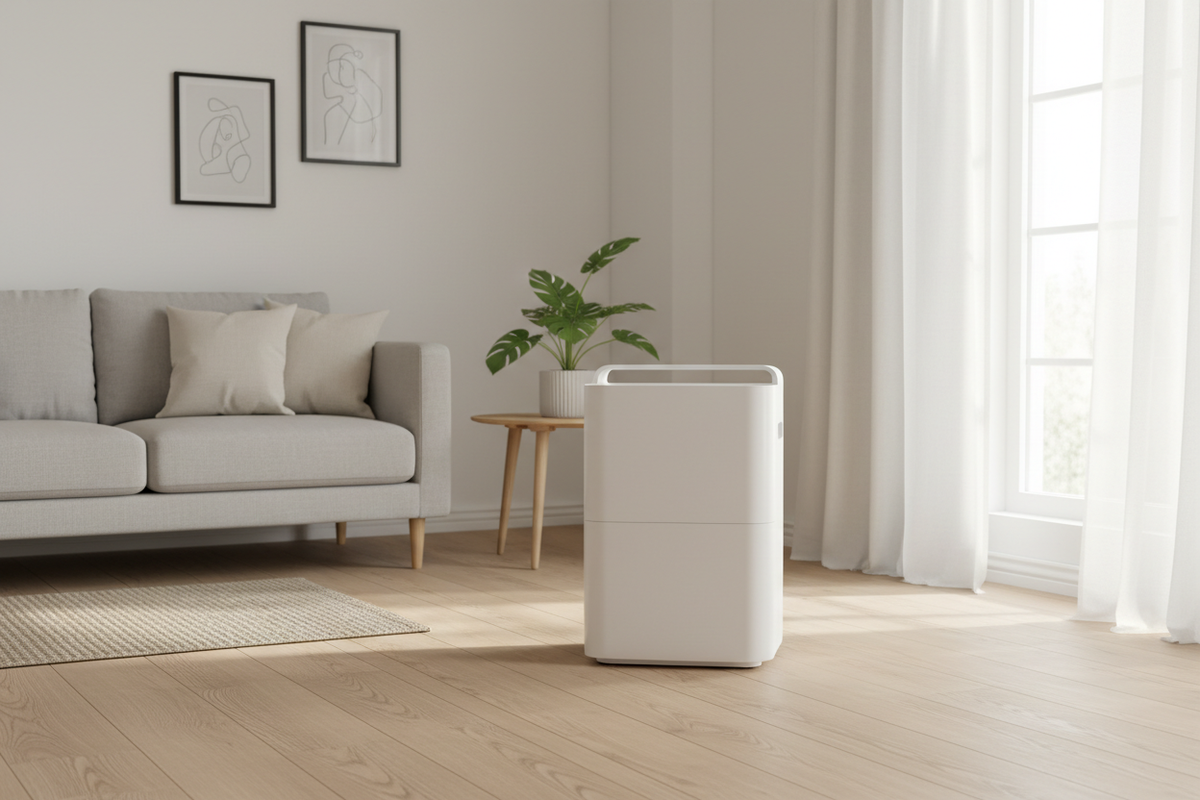
Best Dehumidifiers for European Homes 2026: Complete Buying Guide
If you're searching for the best dehumidifiers for European homes in 2026, you're already ahead of the curve. Excess humidity is one of the most common — and most damaging — problems in homes across Europe, from the damp Atlantic coasts of Ireland and Portugal to the humid summers of southern Italy and Greece. Left unchecked, high indoor humidity causes mould growth, structural damage, respiratory issues, and musty odours. The right dehumidifier solves all of this efficiently, quietly, and at a running cost that won't shock your electricity bill.
Why Humidity Control Matters in European Homes
Europe's climate diversity means humidity challenges vary significantly by region, but no country is immune. In northern and western Europe — the UK, the Netherlands, Belgium, and Scandinavia — persistent damp from rain and cold walls creates condensation problems year-round. In southern Europe, summer humidity spikes make indoor air feel oppressive even when temperatures are manageable. In central Europe, poorly insulated older buildings trap moisture and accelerate mould growth.
The ideal indoor relative humidity (RH) sits between 40% and 60%. Below 40%, air becomes too dry and irritates airways; above 60%, mould and dust mites thrive. A quality dehumidifier keeps your home in that optimal range automatically, protecting both your health and your property.
For a complete picture of indoor air quality management, pairing a dehumidifier with a smart air purifier gives you control over both humidity and airborne particles — a powerful combination for allergy sufferers and families with young children.
Types of Dehumidifiers: Which Is Right for You?
Understanding the two main dehumidifier technologies helps you make the right choice for your climate and home type.
Compressor (refrigerant) dehumidifiers work by drawing air over cold coils, condensing moisture, and collecting it in a tank. They are highly efficient in warm, humid conditions (above 15°C) and are the most common choice for living rooms, bedrooms, and kitchens across southern and central Europe. They extract more litres per day per watt consumed, making them the energy-efficient choice for summer use.
Desiccant dehumidifiers use a moisture-absorbing material (typically silica gel) to extract humidity from the air. They work effectively at lower temperatures — even below 5°C — making them ideal for garages, basements, caravans, and homes in northern Europe during winter months. They are quieter than compressor models but consume slightly more energy per litre extracted.
Peltier (thermoelectric) dehumidifiers are compact, silent, and suited for small spaces like wardrobes, bathrooms, or caravans. They are not designed for whole-room dehumidification but serve a useful niche role.
Key Specifications to Compare
When evaluating dehumidifiers for a European home, focus on these core metrics:
Extraction capacity (litres per day)
This is the headline figure — how many litres of water the unit removes from the air per 24 hours under standard test conditions. As a general guide:
- Up to 10 L/day → small rooms (up to 30 m²)
- 10–20 L/day → medium rooms or open-plan spaces (30–70 m²)
- 20–30 L/day → large rooms or whole-floor dehumidification
- 30 L/day+ → basements, construction drying, or severe damp problems
Note that EU test conditions (typically 30°C / 80% RH) are more favourable than real-world conditions. Expect real-world extraction to be 30–50% lower than the rated figure in typical European conditions.
Energy efficiency
Since the EU's Ecodesign Regulation for dehumidifiers came into force, all models sold in Europe must display an EU Energy Label. Look for A-rated or B-rated models. The key metric is the Energy Efficiency Ratio (EER) — litres extracted per kWh consumed. A higher EER means lower running costs. At average EU electricity prices, a well-rated 20 L/day dehumidifier costs approximately €80–120 per year to run continuously.
Tank capacity and continuous drainage
Most portable dehumidifiers include a water tank (typically 2–5 litres) that requires manual emptying. For continuous, unattended operation — especially in basements or during extended holidays — look for models with a continuous drainage outlet that connects to a hose and drains directly into a sink or floor drain.
Noise level
For bedroom or living room use, aim for models rated below 40 dB at minimum speed. Compressor models typically range from 38–48 dB; desiccant models tend to be quieter at 35–42 dB.
Humidity control and smart features
The best 2026 models include a built-in humidistat that lets you set a target RH level — the unit runs automatically until the target is reached, then switches to standby. Premium models add Wi-Fi connectivity, app control, and integration with smart home platforms. If you're building a connected home, see our smart home devices guide 2026 for how dehumidifiers fit into a broader automation setup.
EU Regulations and What They Mean for Buyers
The EU's Ecodesign Regulation (EU) 2016/1253 sets minimum performance standards for household dehumidifiers sold in Europe. All compliant models must:
- Display a standardised EU Energy Label with efficiency class (A to G scale)
- Meet minimum EER thresholds depending on capacity category
- Include product information sheets with standardised data for comparison
For buyers, this means you can trust that any dehumidifier sold through legitimate EU retailers meets a baseline of energy performance. It also makes comparison straightforward — use the energy label's annual consumption figure (kWh/year) to calculate running costs at your local electricity rate.
Buying Tips: How to Choose the Best Dehumidifier for Your Home
Use this checklist before purchasing:
- Identify your primary use case — whole-room humidity control, basement drying, or targeted spot dehumidification each call for different capacity and technology choices
- Match capacity to room size — and remember to apply a real-world correction factor of 30–50% to rated extraction figures
- Choose the right technology for your climate — compressor for warm/humid conditions, desiccant for cold spaces or year-round northern European use
- Prioritise the EU Energy Label — A or B-rated models save significantly on running costs over a 5–10 year lifespan
- Check tank size vs. drainage options — if you can't empty the tank daily, continuous drainage is essential
- Look for a built-in humidistat — automatic humidity control prevents over-drying and reduces energy waste
- Consider noise ratings — especially for bedrooms, nurseries, or home offices
- Check the warranty — EU consumer law guarantees a minimum 2-year warranty; quality brands typically offer 3–5 years on the compressor
If you're also managing dry air in winter, a smart humidifier complements a dehumidifier perfectly — one for summer damp, one for winter dryness — giving you year-round humidity control.
Conclusion: Protect Your Home and Health in 2026
The best dehumidifiers for European homes in 2026 are more efficient, quieter, and smarter than ever. Whether you're tackling persistent damp in a northern European basement, managing summer humidity in a Mediterranean apartment, or simply maintaining healthy indoor air quality year-round, there's a model precisely suited to your needs and budget.
Don't let excess moisture damage your home or compromise your family's health. Browse our full range of dehumidifiers at OnlineStore24.eu — with fast delivery across Europe, EU-compliant energy ratings, and expert product information to help you choose with confidence.