Best Smart Ceiling Fans 2026: App-Controlled Cooling Guide for Europe
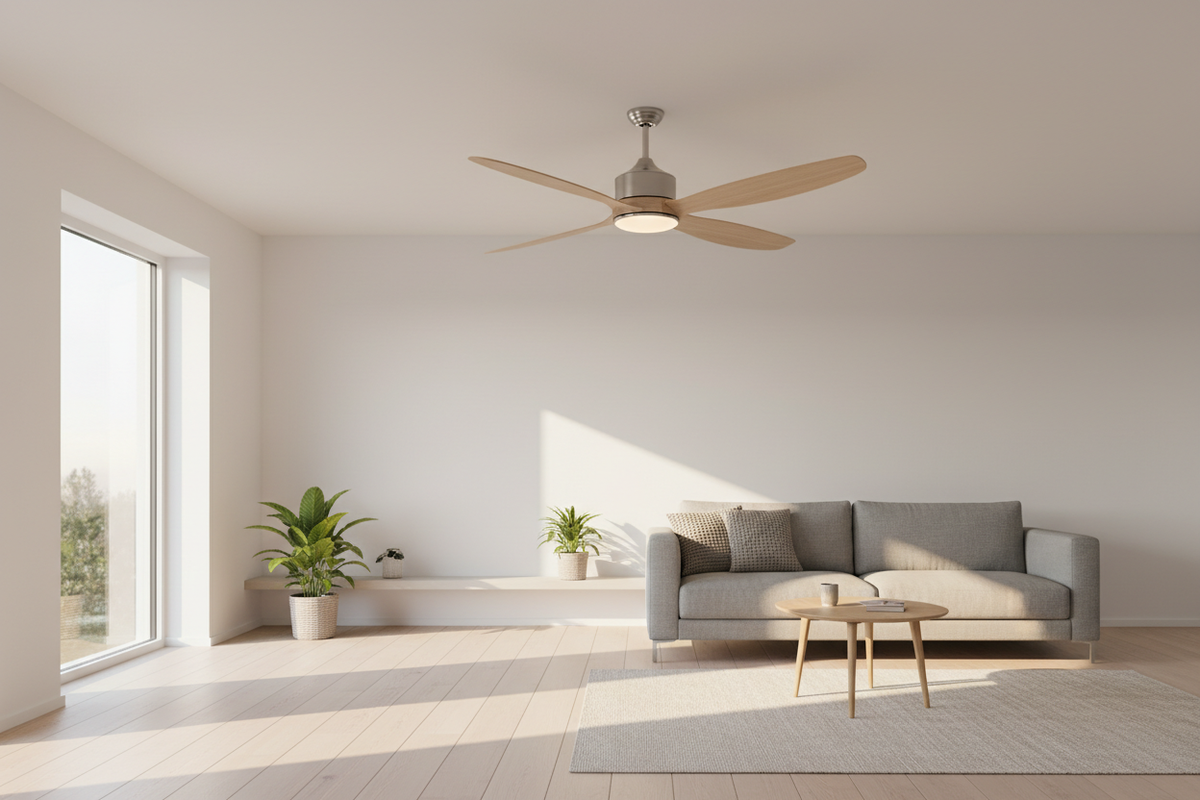
Best Smart Ceiling Fans 2026: App-Controlled Cooling Guide for Europe
As European summers grow hotter and energy costs remain high, smart ceiling fans have emerged as one of the most efficient and elegant solutions for home cooling. Unlike air conditioning units, ceiling fans consume a fraction of the energy while circulating air effectively throughout a room. In 2026, smart ceiling fans go further still — offering app control, voice assistant integration, scheduling, and seamless connection to your smart home ecosystem. This guide covers everything European homeowners need to know to choose the best smart ceiling fan, including EU electrical standards, energy efficiency, and practical buying advice.
Why Choose a Smart Ceiling Fan in 2026?
Traditional ceiling fans are effective but limited — you control them with a pull cord or a basic wall switch. Smart ceiling fans transform this experience entirely:
- App control: Adjust speed, direction, and lighting (on models with integrated lights) from your smartphone, from anywhere in the home or remotely.
- Voice control: Compatible fans work with Amazon Alexa, Google Assistant, and Apple Siri — adjust speed or turn the fan on/off with a simple voice command.
- Scheduling: Set the fan to run at specific times — for example, starting 30 minutes before you arrive home, or switching off automatically at midnight.
- Smart home integration: Link your fan to your thermostat, temperature sensors, or smart home hub to create automated comfort routines — for example, increasing fan speed when room temperature exceeds a set threshold.
- Energy monitoring: Some models track energy consumption, helping you optimise usage and reduce electricity bills.
- Reversible motor: All quality ceiling fans include a reversible motor — counterclockwise in summer to create a cooling downdraft, clockwise in winter to recirculate warm air that rises to the ceiling, reducing heating costs.
For a broader view of how a smart ceiling fan fits into a connected home, see our Smart Home Devices Guide 2026.
EU Electrical Standards & Regulations
Ceiling fans involve mains electrical installation, making EU compliance particularly important. European buyers must verify several factors:
Voltage & Frequency
European mains power is 220–240V AC at 50 Hz. Ceiling fans designed for the North American market operate at 110–120V / 60 Hz and are incompatible with European wiring without a transformer — and even then, the 60 Hz motor design may not perform optimally at 50 Hz. Always purchase fans explicitly designed and certified for the European market.
CE Marking & Safety Standards
All ceiling fans sold in the EU must carry the CE mark, confirming compliance with EU Low Voltage Directive (LVD) 2014/35/EU and Electromagnetic Compatibility Directive (EMC) 2014/30/EU. Smart fans with wireless connectivity must additionally comply with the Radio Equipment Directive (RED) 2014/53/EU.
EU Energy Efficiency Regulations
Since 2021, ceiling fans sold in the EU are subject to EU Regulation 2019/1781, which sets minimum energy efficiency requirements and mandates energy labelling. Look for fans with an Energy Efficiency Grade of A or B under the EU energy label system. DC motor fans are significantly more efficient than AC motor fans and typically achieve higher efficiency grades.
Installation Requirements
Ceiling fan installation involves mains electrical wiring and, in most EU countries, must be carried out by a qualified electrician if you are not competent to do so safely. Ensure the ceiling mounting point is structurally adequate — ceiling fans are heavier than standard light fittings and require a reinforced mounting box rated for fan installation. Budget approximately €80–€150 for professional installation if needed.
Key Features to Look for in a Smart Ceiling Fan
Motor Type: DC vs. AC
This is the most important technical specification:
- DC motor fans are significantly more energy-efficient (typically using 60–70% less electricity than equivalent AC models), quieter, lighter, and offer more speed settings (often 6 or more). They are the preferred choice for smart fans and are required for the highest EU energy efficiency ratings. DC fans cost more upfront but pay back the difference in energy savings over time.
- AC motor fans are simpler, more affordable, and highly reliable, but less efficient and typically limited to 3 speed settings. They are less common in the smart fan category in 2026.
Blade Span & Room Size
Matching blade span to room size is critical for effective air circulation:
- Up to 10 m²: 90–105 cm blade span
- 10–20 m²: 107–132 cm blade span
- 20–40 m²: 132–152 cm blade span
- 40+ m²: 152+ cm blade span, or multiple fans
Ceiling Height & Mounting Options
For standard ceiling heights (2.4–2.7 m), a flush-mount (hugger) fan is safest, keeping blades well above head height. For higher ceilings (3 m+), a downrod mount is appropriate — choose the downrod length to position the fan blades at approximately 2.1–2.4 m above the floor for optimal airflow. Angled ceiling adapters are available for sloped ceilings.
Integrated Lighting
Many smart ceiling fans include an integrated LED light kit, combining ceiling illumination with air circulation in a single fixture. Look for fans with dimmable LED lighting (compatible with your smart home lighting system) and a colour temperature option (warm white for living areas, cool white for kitchens and offices). Some premium models include smart lighting that integrates with platforms like Philips Hue or your existing smart LED ecosystem.
Smart Connectivity
- Wi-Fi: Enables remote control from anywhere and integration with voice assistants and smart home platforms without a separate hub.
- RF remote: Most smart fans include a physical RF remote as a backup control method — useful when your phone is not to hand.
- Zigbee/Z-Wave/Matter: Some premium fans support these protocols for integration with a smart home hub, enabling local control and more sophisticated automations.
Noise Level
A ceiling fan in a bedroom or living room must be quiet. DC motor fans are inherently quieter than AC models. Check manufacturer noise ratings (measured in dB) and read user reviews specifically mentioning noise at various speeds. A fan that hums or wobbles at higher speeds will quickly become an annoyance.
Smart Buying Tips for European Homeowners
- Verify EU certification explicitly: Don't assume — check the product listing for CE marking, EU energy label grade, and confirmation of 220–240V / 50 Hz compatibility before purchasing.
- Measure your room and ceiling height: Use the blade span guide above and measure your ceiling height before selecting a fan. A fan that's too small for the room will be ineffective; one mounted too low is a safety hazard.
- Choose DC motor for smart fans: In 2026, there's little reason to choose an AC motor smart fan. DC motors are quieter, more efficient, and offer more speed settings — all of which enhance the smart fan experience.
- Pair with your smart thermostat: The most effective use of a smart ceiling fan is in combination with a smart thermostat. When the thermostat detects the room is above your comfort temperature, it can automatically activate the fan — reducing reliance on air conditioning and cutting energy costs.
- Check app language support: Ensure the companion app is available in your language — Spanish, Dutch, French, German, Italian, and other EU languages are supported by most major brands.
- Factor in installation costs: If you need a professional electrician, add €80–€150 to your budget. Some retailers offer installation services — worth checking at the point of purchase.
- EU warranty: EU consumer law guarantees a minimum 2-year warranty. Buy from authorised EU retailers to ensure coverage and access to EU-compliant customer support.
Conclusion: Cool Smarter, Spend Less
A smart ceiling fan is one of the most energy-efficient and cost-effective ways to improve comfort in a European home during the increasingly warm summer months — and a surprisingly effective heating aid in winter when used in reverse. In 2026, with DC motor efficiency, app control, voice assistant integration, and smart home compatibility all standard features on quality models, there has never been a better time to upgrade.
Prioritise EU certification, DC motor technology, appropriate blade span for your room, and compatibility with your existing smart home ecosystem. A well-chosen smart ceiling fan will pay for itself in energy savings within a few seasons while delivering year-round comfort and convenience.
Ready to upgrade your home's cooling? Browse our full range of smart ceiling fans and home climate devices at onlinestore24.eu — with fast EU-wide shipping and all prices in euros.
Meta description: Find the best smart ceiling fans for European homes in 2026. App control, EU compatibility, energy efficiency & expert buying tips included.