Best Smart Home Hubs 2026: Matter, Zigbee & Z-Wave Guide for Europe
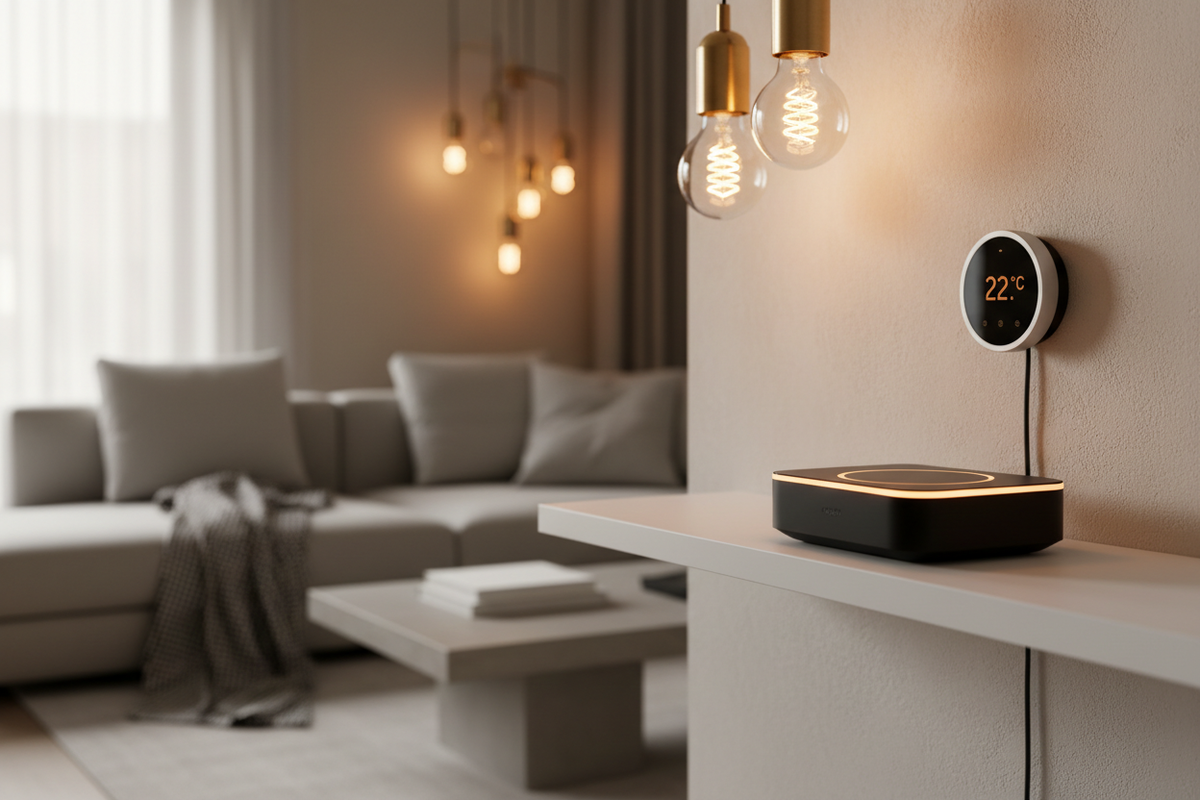
Best Smart Home Hubs 2026: Matter, Zigbee & Z-Wave Guide for Europe
A smart home hub is the brain of your connected home — the central controller that links your smart lights, locks, sensors, thermostats, and appliances into a single, unified system. Without a hub, smart devices often operate in isolated silos, each requiring its own app and unable to communicate with devices from other brands. In 2026, the smart home hub landscape has been transformed by the Matter standard, while Zigbee and Z-Wave remain essential protocols for European homes. This guide covers everything you need to know to choose the best smart home hub for your European property.
Why You Need a Smart Home Hub in 2026
With dozens of smart home protocols and hundreds of device brands on the market, a hub provides the interoperability layer that makes everything work together. Here's what a quality smart home hub delivers:
- Unified control: Manage all your smart devices from a single app or voice assistant, regardless of brand or protocol.
- Local processing: Premium hubs process automations locally, meaning your smart home continues to function even when your internet connection drops — critical for reliability.
- Advanced automations: Create complex routines that span multiple device types and brands — for example, triggering your heating, lights, and locks simultaneously when you arrive home.
- Reduced cloud dependency: Local hubs minimise the amount of data sent to external servers, improving privacy and reducing GDPR exposure.
- Future-proofing: A hub that supports Matter, Zigbee, and Z-Wave gives you the flexibility to add devices from any ecosystem without being locked into a single brand.
For a comprehensive overview of how a smart home hub fits into a broader connected home setup, see our Smart Home Devices Guide 2026.
Understanding the Key Protocols: Matter, Zigbee & Z-Wave
Choosing the right hub starts with understanding the protocols it supports. In 2026, three protocols dominate the European smart home market:
Matter
Matter is the newest and most significant development in smart home interoperability. Backed by Apple, Google, Amazon, Samsung, and hundreds of device manufacturers, Matter is an IP-based protocol that runs over Wi-Fi and Thread (a low-power mesh networking protocol). Its key advantage is universal compatibility — a Matter-certified device works with any Matter-compatible hub or ecosystem, regardless of brand.
In Europe, Matter adoption has accelerated rapidly since 2023. Most new smart home devices launched in 2024–2026 include Matter certification, and many existing devices have received Matter support via firmware updates. If you're building a new smart home from scratch in 2026, prioritising Matter-compatible devices and a Matter-supporting hub is the most future-proof approach.
Thread Border Router: To use Thread-based Matter devices (such as smart sensors and bulbs), your hub must include a Thread Border Router. Check this specification carefully — not all hubs that claim Matter support include a Thread Border Router.
Zigbee
Zigbee is a mature, low-power mesh networking protocol that has been the backbone of smart home automation for over a decade. It operates on the 2.4 GHz frequency band and supports hundreds of devices from brands including Philips Hue, IKEA Trådfri, Aqara, Sonoff, and many others widely available across Europe.
Zigbee's mesh architecture means each device acts as a signal repeater, extending network range throughout your home. It's particularly well-suited to large properties or homes with thick walls where Wi-Fi signal is inconsistent. Zigbee devices are generally more affordable than Wi-Fi equivalents and consume significantly less power — important for battery-powered sensors.
Z-Wave
Z-Wave operates on sub-GHz frequencies (868 MHz in Europe — distinct from the US frequency of 908 MHz, so always verify EU-specific Z-Wave devices). This lower frequency gives Z-Wave superior wall penetration and range compared to Zigbee, making it particularly popular for larger European homes and for devices like smart locks, door/window sensors, and motorised blinds where reliability is paramount.
Z-Wave is a closed standard (managed by the Z-Wave Alliance), which means all certified devices must meet strict interoperability requirements — a Z-Wave device from any brand will work with any Z-Wave hub. The ecosystem is smaller than Zigbee but highly reliable.
Types of Smart Home Hubs Available in Europe
Smart home hubs come in several forms, each suited to different needs and technical comfort levels:
Dedicated Smart Home Hubs
Standalone hubs (such as those running Home Assistant, Homey, or similar platforms) offer the most flexibility and local processing power. They typically support multiple protocols simultaneously (Matter, Zigbee, Z-Wave, Wi-Fi, Bluetooth) and provide advanced automation capabilities. Prices range from approximately €100–€400 depending on features and included radios. These are the preferred choice for enthusiasts and users who want maximum control and privacy.
Ecosystem Hubs (Smart Speakers & Displays)
Devices like the Amazon Echo (4th gen and later), Apple HomePod (2nd gen), and Google Nest Hub (2nd gen) include Thread Border Router functionality and Matter support, making them capable hubs for many users. They're convenient if you're already invested in one of these ecosystems, but offer less flexibility for cross-brand automations and rely more heavily on cloud processing.
Router-Integrated Hubs
Some Wi-Fi routers now include built-in Zigbee or Thread radios, combining network and smart home hub functionality in a single device. This is an elegant solution for minimising hardware, though the automation capabilities are typically more limited than dedicated hubs.
EU Compatibility & Regulatory Considerations
European buyers should verify several factors before purchasing a smart home hub:
- CE Marking: All wireless hubs sold in the EU must carry the CE mark and comply with the Radio Equipment Directive (RED) 2014/53/EU.
- Z-Wave frequency: Ensure any Z-Wave hub or device is certified for the European 868 MHz frequency. US-market Z-Wave devices (908 MHz) are not legally compliant in Europe and will not interoperate with EU-frequency devices.
- EU Plug Standard: Hubs are mains-powered and must use the correct EU plug (Type C, E, or F — Schuko). Devices sold through authorised EU retailers will include the appropriate adapter.
- GDPR Compliance: Hubs that process data locally are inherently more GDPR-friendly than cloud-dependent systems. For cloud-connected hubs, verify the manufacturer's data processing location and privacy policy. Open-source platforms like Home Assistant store all data locally by default.
- Voltage: Confirm the hub's power supply supports 220–240V AC, standard across Europe.
Key Features to Look for in a Smart Home Hub
Protocol Support
The more protocols a hub supports natively, the more devices it can control without additional bridges. Look for hubs that support Matter + Thread Border Router + Zigbee + Z-Wave as a minimum for a future-proof setup. Wi-Fi and Bluetooth support are also useful for devices that don't use mesh protocols.
Local vs. Cloud Processing
Local processing is strongly preferable for reliability, speed, and privacy. Automations that run locally execute in milliseconds and continue working during internet outages. Cloud-dependent automations introduce latency and a single point of failure. For European users concerned about GDPR, local processing also minimises data exposure.
Integration Ecosystem
Check how many devices and services the hub integrates with. Open-source platforms like Home Assistant support thousands of integrations, while proprietary platforms may be more limited. Consider which devices you already own or plan to buy — including smart plugs and smart LED bulbs — and verify compatibility before purchasing.
User Interface & Ease of Use
Hub platforms vary enormously in complexity. Home Assistant offers unparalleled flexibility but has a steeper learning curve. Homey Pro is designed for non-technical users with a polished app and drag-and-drop automation builder. Ecosystem hubs (Amazon, Google, Apple) are the simplest to set up but the least flexible. Choose based on your technical comfort level and how much time you're willing to invest in configuration.
Hardware Specifications
For hubs running complex automations across many devices, processing power matters. Look for hubs with at least a quad-core processor and 2GB+ RAM if you plan to run a large installation (50+ devices). Storage is also relevant if you plan to run local voice processing or store logs and camera footage locally.
Smart Buying Tips for European Consumers
- Start with your existing devices: List the smart devices you already own and check which protocols they use. Choose a hub that natively supports those protocols to avoid needing additional bridges.
- Prioritise Matter for new purchases: When buying new smart devices in 2026, prioritise Matter-certified products. This gives you maximum flexibility to switch hubs or ecosystems in the future without replacing devices.
- Check Thread Border Router inclusion: If you plan to use Thread-based devices, confirm your hub includes a Thread Border Router — not just Matter support over Wi-Fi.
- Consider open-source platforms: Home Assistant (running on hardware like the Home Assistant Green or a Raspberry Pi) offers the most flexibility, local processing, and GDPR-friendly operation. It has a large European user community and extensive documentation in multiple languages.
- Plan your network infrastructure: A smart home hub is only as reliable as your home network. Consider a mesh Wi-Fi system and a dedicated IoT VLAN (virtual network) to isolate smart home devices from your main network for security.
- EU warranty: EU consumer law guarantees a minimum 2-year warranty. Buy from authorised EU retailers to ensure coverage.
- Community & support: For complex platforms, an active user community is invaluable. Check forum activity, update frequency, and the availability of documentation in your language before committing.
Conclusion: The Hub Is the Heart of Your Smart Home
In 2026, a smart home hub is no longer a luxury — it's the foundation of a truly intelligent, interoperable home. Whether you choose a powerful open-source platform for maximum flexibility, a polished consumer hub for ease of use, or an ecosystem device for seamless integration with your existing setup, the right hub will unify your devices, enable powerful automations, and future-proof your investment.
Prioritise Matter and Thread Border Router support for new installations, verify Z-Wave EU frequency compliance, and choose local processing wherever possible for reliability and GDPR-friendly operation. With the right hub at the centre of your smart home, the possibilities are genuinely limitless.
Ready to build your smart home around a powerful hub? Browse our full range of smart home hubs and controllers at onlinestore24.eu — with fast EU-wide shipping and all prices in euros.
Meta description: Find the best smart home hubs for Europe in 2026. Compare Matter, Zigbee & Z-Wave controllers with EU compatibility tips & expert buying advice.