Smart TV HDR Formats 2026 – Dolby Vision vs HDR10+ vs HLG Complete Guide for Europe
📺 Smart TV Technology — Day 3
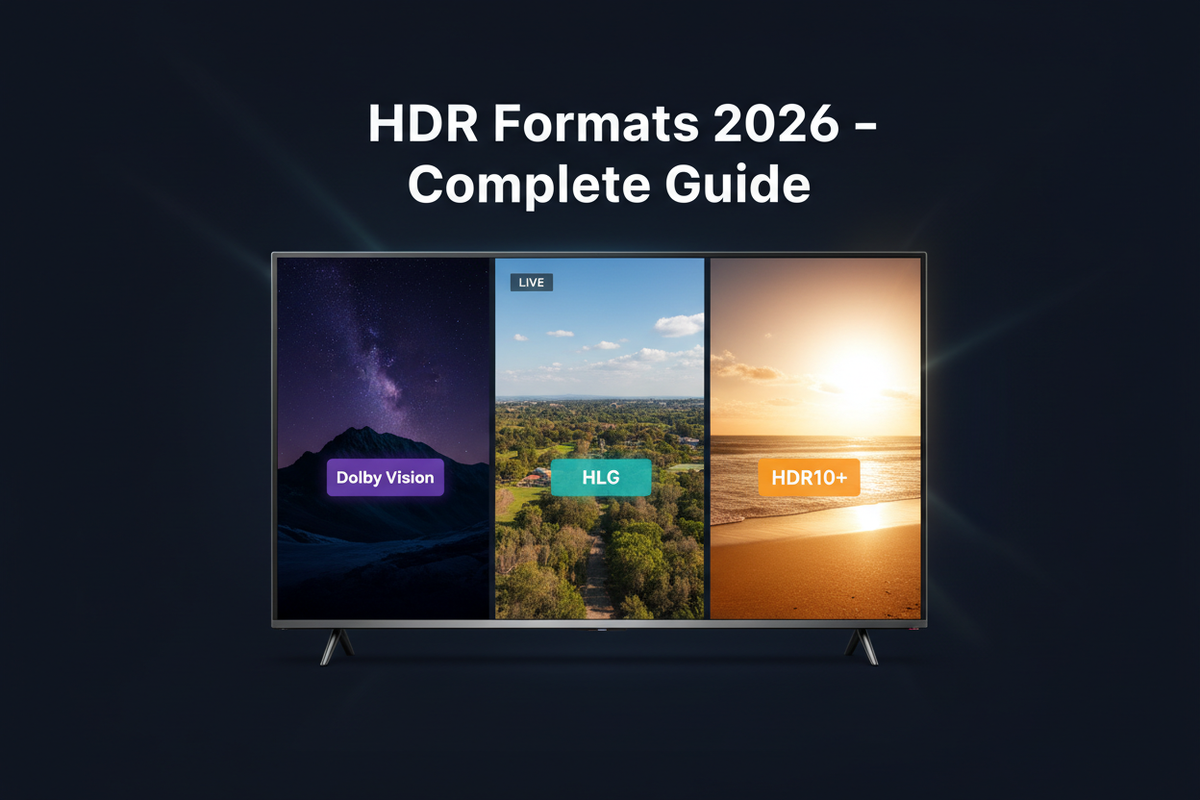
Smart TV HDR Formats 2026: Dolby Vision vs HDR10+ vs HLG
Understand every HDR format so you can pick the right smart TV for streaming, gaming, and movies in Europe.
🛒 Explore HDR Smart TVsIf you're shopping for a smart TV in Europe in 2026, HDR (High Dynamic Range) is arguably more important than resolution. While 4K determines how sharp the picture is, HDR determines how good it looks — with brighter highlights, deeper blacks, and richer colors. But not all HDR is equal. This guide breaks down Dolby Vision, HDR10+, HDR10, and HLG so you can choose the right refurbished smart TV for your needs.
📋 Quick Summary — HDR Formats Compared
- HDR10 — Universal baseline, every HDR TV supports it ✅
- Dolby Vision — Best quality, dynamic scene-by-scene metadata, Netflix & Apple TV+ standard 🏆
- HDR10+ — Samsung's dynamic HDR, Amazon Prime Video standard, royalty-free 🔓
- HLG — For live TV broadcasts, used by BBC, ARD, RAI and other European broadcasters 📡
What Is HDR and Why Does It Matter?
HDR expands the range of brightness and color a TV can display. A good HDR TV shows details in dark shadows and bright highlights simultaneously — something standard dynamic range (SDR) TVs cannot do. In 2026, nearly every 4K smart TV sold in Europe supports at least HDR10, but premium formats like Dolby Vision deliver a noticeably better experience.
HDR10 — The Universal Baseline
HDR10 is the industry standard. Every HDR-capable TV, streaming device, and 4K Blu-ray player supports it. It uses static metadata, meaning one set of brightness and color parameters applies to the entire movie or show.
- ✅ Supported by every HDR TV on the market
- ✅ Open standard — no licensing fees for manufacturers
- ⚠️ Static metadata = less precise than Dolby Vision or HDR10+
- 📍 Found on: All refurbished 4K TVs from €199 and up
Dolby Vision — The Premium King 🏆
Dolby Vision is the gold standard for HDR. It uses dynamic metadata that adjusts brightness and color scene by scene — even frame by frame. Netflix, Apple TV+, Disney+, and most 4K Blu-rays use Dolby Vision as their primary HDR format.
- 🏆 Best picture quality — supports up to 10,000 nits brightness (future-proof)
- ✅ Dynamic metadata adjusts every scene for optimal contrast
- ✅ Supported by LG, Sony, TCL, Hisense, Philips — not Samsung
- ⚠️ Requires licensing fee — slightly more expensive TVs
- 📍 Best on: Refurbished OLED TVs and premium QLED models
HDR10+ — Samsung's Dynamic Alternative
HDR10+ is Samsung's answer to Dolby Vision. It also uses dynamic metadata but is royalty-free, making it cheaper for manufacturers to implement. Amazon Prime Video is the biggest streaming service using HDR10+.
- ✅ Dynamic metadata — scene-by-scene optimization (like Dolby Vision)
- ✅ Royalty-free — keeps TV prices lower
- ✅ Supported by Samsung, Panasonic, TCL, Hisense, Philips
- ⚠️ Less content than Dolby Vision — mostly Amazon Prime Video
- 📍 Best on: Refurbished Samsung QLED TVs
HLG — Broadcast TV's HDR Format 📡
HLG (Hybrid Log-Gamma) was developed by the BBC and NHK for live TV broadcasts. Unlike streaming HDR formats, HLG doesn't use metadata — it's backward-compatible with SDR TVs. European broadcasters like BBC (UK), ARD/ZDF (Germany), RAI (Italy), and France Télévisions use HLG for sports and live events.
- ✅ No metadata needed — works on any HDR TV automatically
- ✅ Backward compatible with SDR TVs
- ⚠️ Limited to broadcast content — not used by streaming services
- 📍 Useful for: European sports fans watching live 4K HDR broadcasts
| Feature | HDR10 | Dolby Vision | HDR10+ | HLG |
|---|---|---|---|---|
| Metadata | Static | Dynamic 🏆 | Dynamic | None |
| Max Brightness | 1,000 nits | 10,000 nits | 10,000 nits | 1,000 nits |
| Main Use | Universal | Streaming/Blu-ray | Prime Video | Live TV |
| Key Brands | All | LG, Sony, TCL | Samsung | All |
🎯 Find Your Perfect HDR Smart TV
Whether you want Dolby Vision for Netflix or HDR10+ for Prime Video, we have certified refurbished TVs with all major HDR formats.
Browse HDR Smart TVs 🔥 Hot DealsWhich HDR Format Should You Prioritize?
🎬 HDR Priority by Use Case
- Netflix & Apple TV+ streamers: Dolby Vision is essential — these platforms use it as their primary HDR format
- Amazon Prime Video users: HDR10+ delivers the best experience on Prime
- 4K Blu-ray collectors: Dolby Vision rules physical media — most UHD discs include it
- Sports fans: HLG matters for live 4K broadcasts on European networks
- Budget buyers: HDR10 is perfectly fine — the jump from SDR to any HDR is massive
- Gamers: HDR10 is the gaming baseline; Dolby Vision gaming is supported on Xbox Series X|S
🔗 Related Smart TV Guides
FAQ — HDR Formats for Smart TVs
Q: Do all 4K TVs support Dolby Vision?
A: No. Samsung TVs use HDR10+ instead. LG, Sony, TCL, Hisense, and Philips generally support Dolby Vision. Always check the specs before buying.
Q: Is HDR10 enough, or do I need Dolby Vision?
A: HDR10 is a huge upgrade from SDR and perfectly fine for budget buyers. But if you watch a lot of Netflix or Apple TV+, Dolby Vision provides noticeably better picture quality, especially in dark scenes.
Q: Does YouTube support Dolby Vision?
A: No. YouTube uses HDR10 and HLG. For Dolby Vision content, you need Netflix, Apple TV+, Disney+, or a 4K Blu-ray player.
Q: Can a refurbished TV have good HDR?
A: Yes. Many certified refurbished smart TVs from 2023–2024 support Dolby Vision or HDR10+ and deliver excellent HDR performance at 30–50% off retail prices.
Get the Best HDR Experience for Less
Shop certified refurbished smart TVs with Dolby Vision, HDR10+, and HLG — all with warranty and fast EU delivery.
🛒 Browse HDR Smart TVs Now12–24 month warranty • Free shipping available • 14-day returns